
An uneven concrete floor can cause more trouble than many homeowners expect. Even when the slab looks mostly intact, dips, ridges, and uneven transitions can affect how the next finish looks and performs. If you are planning decorative concrete, epoxy, tile, luxury vinyl plank, carpet, or polished concrete, this guide will help you spot when self-leveling cement may be the right next step.
What it does
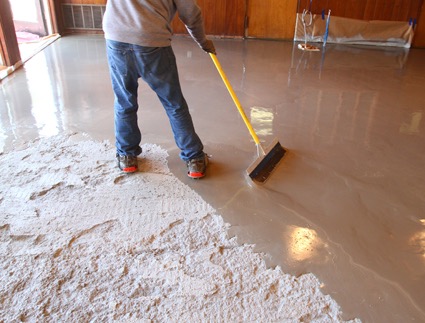
 Self-leveling cement is a pourable floor leveling compound designed to correct uneven concrete slabs. It flows into low areas and cures into a smooth, flat surface that is ready for the next finish. Infinity Concrete Coatings uses it before decorative concrete coatings, epoxy systems, tile, luxury vinyl plank, carpet, or polished concrete when the slab needs better prep.
1 – You feel dips or low spots when you walk the floor
A floor does not need to be cracked apart to have a problem. If it feels uneven underfoot, that is often a sign the slab has low spots or dips that should be corrected before a finish is installed. These surface changes can affect both comfort and appearance.
2 – Water collects in shallow areas
Standing water is another strong clue. Infinity specifically points to low spots and dips that collect water, along with birdbaths in garages or commercial spaces. When moisture settles in the same spots, it can signal that the slab is out of plane.
3 – The slab has obvious highs and lows before new flooring goes in
 Concrete floor leveling is commonly used before epoxy, tile, LVP, carpet, decorative coatings, or polished concrete so the final floor looks better and performs longer. If the slab already shows noticeable highs and lows, self-leveling cement can help create the flatter surface those finishes need.
4 – Grinding marks, ridges, or patched areas are still visible
Not every slab problem is structural. Sometimes the issue is an irregular surface that will show through the final finish. Infinity lists grinding marks, ridges, trowel patterns, and patched areas as common reasons to level a slab before the next system goes down.
5 – Transitions between rooms or slab sections are uneven
Doorways, thresholds, additions, and separate slab sections can create awkward transitions. When those areas are uneven, the finished floor may not look or feel consistent from one space to the next. A flatter slab helps create smoother transitions and a more uniform result.
 What the process usually includes
• Measuring flatness and identifying high and low spots
• Preparing the surface by removing coatings, adhesives, oils, or weak concrete
• Repairing cracks and joints where needed
• Applying primer so the self-leveling underlayment bonds properly
• Pouring and smoothing the material to create a flatter plane
• Allowing cure time before the finish is installed
Why this matters before a decorative finish
A flatter slab is not just about looks. Infinity says leveling cement can improve flatness, create better prep for coatings and flooring, reduce lippage and movement in tile and plank flooring, and create smoother transitions. In many cases, it can also be a faster path to a finished floor than repeated patching. For Irvine homeowners comparing finish options, that prep step can make the final surface look cleaner and feel more consistent.
FAQ
What is self-leveling cement used for?
It is used to correct uneven concrete slabs and create a smooth, flat surface before the final finish is installed. Infinity lists decorative concrete coatings, epoxy, tile, LVP, carpet, and polished concrete as common next-step finishes.
Can self-leveling cement fix every crack?
 No. Infinity notes that some cracks and joints are structural or movement-related and may need separate treatment. The leveling layer supports the finish, but it does not replace proper repair where conditions need to remain honored.
Where is concrete floor leveling commonly used in a home?
Infinity lists garages, basements, living areas, and remodel projects as common residential applications. It is used anywhere a smoother, flatter slab is needed before the next finish goes down.
If your floor has dips, standing water, rough surface marks, or uneven transitions, it may be time to consider self-leveling cement before installing a new finish. Contact Infinity Concrete Coatings to learn more, or visit https://www.infinitycc.com/leveling-cement for more information.